
Germplasm Island. Preserving the Amazon’s DNA
From seed to forest.
Created in 1984, Germplasm Island is a strategic environmental asset located
within the Tucuruí hydroelectric power plant complex (PA) and stands out as
one of the important forest conservation centers in the Amazon. Spanning 129
hectares, equivalent to approximately 181 football fields, the area is home to
roughly 100,000 trees of 220 native species.
More than just a protected area, the island functions as a living genetic bank.
Each tree is carefully selected and cultivated as a parent tree for seed
collection and the production of seedlings destined for reforestation projects
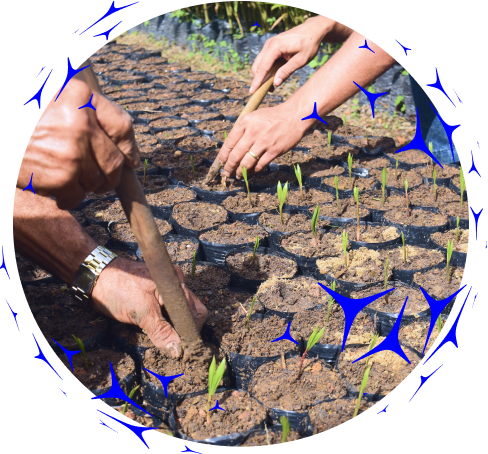
in different parts of the region. The facility includes a nursery capable of
producing up to 120,000 seedlings per year, a forest genetic bank, and a seed
analysis laboratory.
The work involves the careful collection of seeds, their analysis in the
laboratory, and propagation in a nursery, ensuring diversity, genetic quality,
and traceability throughout the entire process. The management plan also
includes ongoing monitoring of wildlife, assessments of plant health, and
preventative actions against invasive species.
The numbers that reveal the power of Germplasm Island.
-
37 million
 Ícone por nome (compatibilidade; a imagem tem prioridade)Historical seed production
 -
800 thousand
Ícone por nome (compatibilidade; a imagem tem prioridade)Historical seed production
-
+120k seedlings
Ícone por nome (compatibilidade; a imagem tem prioridade)Production in 2025
-
+88,000 seedlings
Ícone por nome (compatibilidade; a imagem tem prioridade)Donations in 2025
-
+500
Ícone por nome (compatibilidade; a imagem tem prioridade)Families benefitted
We preserve the Amazon’s DNA to transform seeds into newforests.
For the present
The production and donation of native seeds and seedlings strengthens sustainable supply chains, supports farmers, and empowers local communities. The result is a more diverse forest, more resilient economies, and a restoration cycle that benefits the entire Amazon.
For the future
If you work with environmental restoration, socio-environmental projects, or agriculture in the Amazon, talk to our team to understand how the Germplasm Island can supply initiatives with native seeds and seedlings, subject to availability.
Get to know it up close.
The visit to Germplasm Island is integrated into the tour of the Tucuruí Hydroelectric Power Plant, the second largest hydroelectric plant that is 100% Brazilian. Check out the safety rules and sign up to learn about our assets.
Conservation that drives the future.
Discover some species from GermplasmIsland
Brazil nut (Bertholletia excelsa)
A large tree typical of the Amazon, whose regeneration depends on interaction with wildlife, especially rodents that disperse its fruits. The seeds are rich in selenium and lipids and support an important extractive chain, essential for the income and way of life of Amazonian communities.
Açaí palm (Euterpe oleracea)
A palm tree native to the eastern Amazon, adapted to flooded areas such as floodplains and igapós (flooded forests). It produces fruit throughout the year and is of great nutritional and economic importance, forming the basis of regional production chains, as well as being used in the extraction of palm hearts.
Ice-cream-bean (Inga edulis)
Widely distributed in tropical South America, it frequently occurs in humid areas and riverbanks. The fruits, with their edible pulp, and their ability to fix nitrogen make the species relevant in agroforestry systems and environmental restoration.
Morototó (Didymopanax morototoni)
A pioneer species with a wide distribution in Brazil, common in open and degraded areas. Rapid growth and the availability of food for birds and mammals make it ideal for use in forest restoration projects and the recovery of natural environments.
Cupuaçu (Theobroma grandiflorum)
Native to the Amazon and a close relative of cacao, its reproduction depends on insect pollination. The fruits are widely used in food, while the seeds yield butters and oils used in the cosmetic and food industries.
Copaíba (Copaifera spp.)
A group of tree species common in the Amazon, known for producing oleoresin that accumulates in their trunks. Extracted through non-destructive management, the product is traditionally used in folk medicine and has economic relevance as a non-timber forest resource.
Yellow Ipe (Handroanthus serratifolius)
Present in different Brazilian biomes, it stands out for its intense flowering during the dry season. In addition to its scenic value, the wood is highly durable, which has led to the adoption of stricter controls on its harvesting and trade.
Mahogany (Swietenia macrophylla)
A large Amazonian tree of high economic value. Selective logging over time has reduced natural stocks, requiring more restrictive management practices, such as protecting breeding stock and extending harvesting cycles.